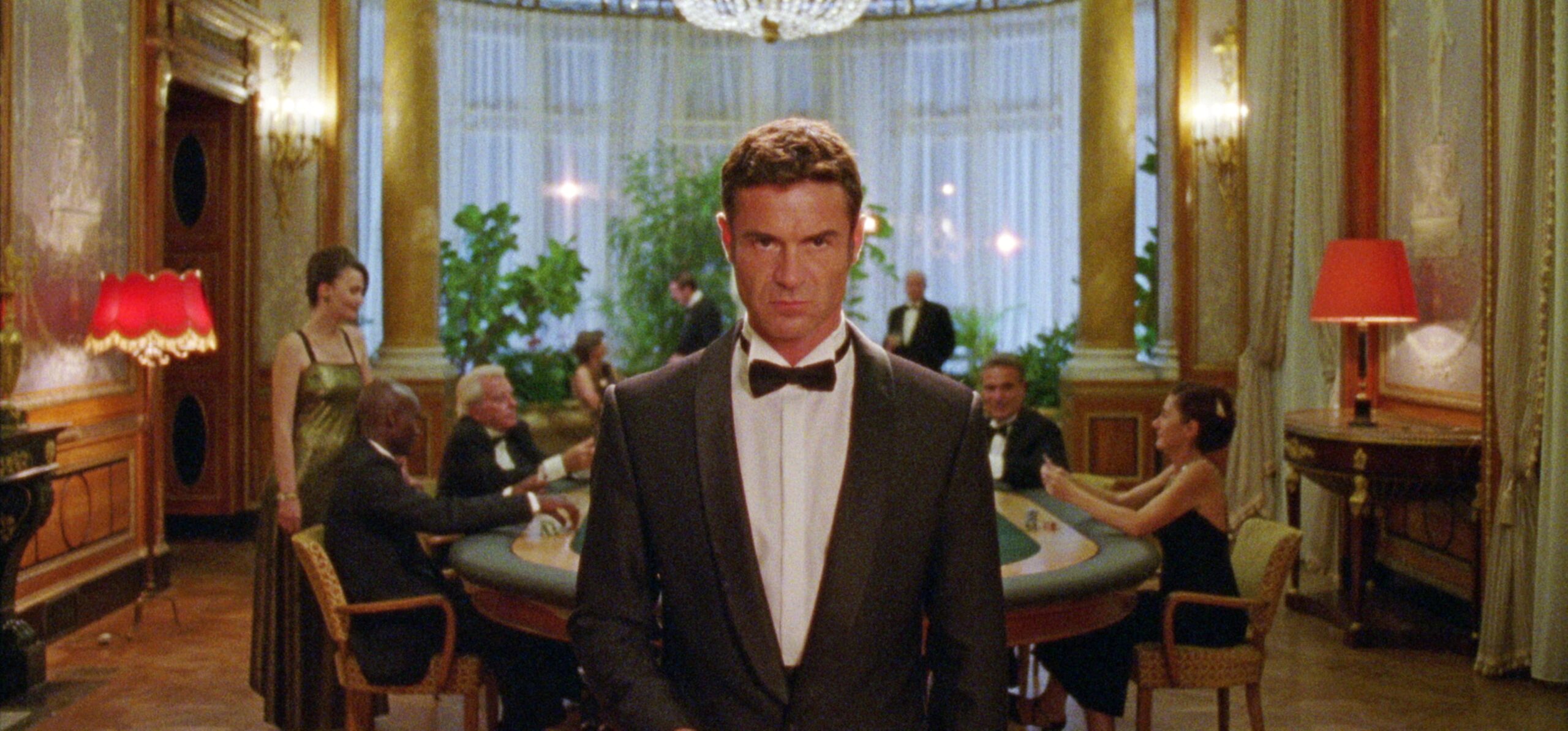
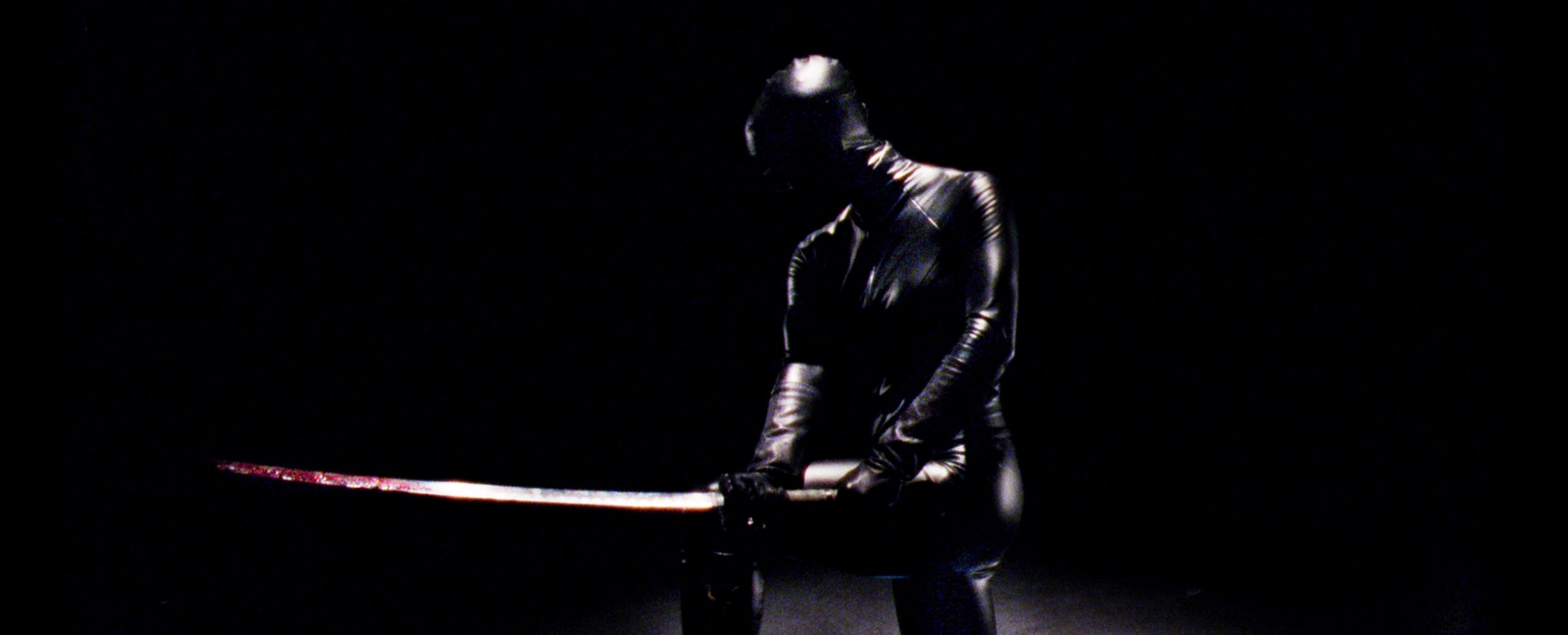
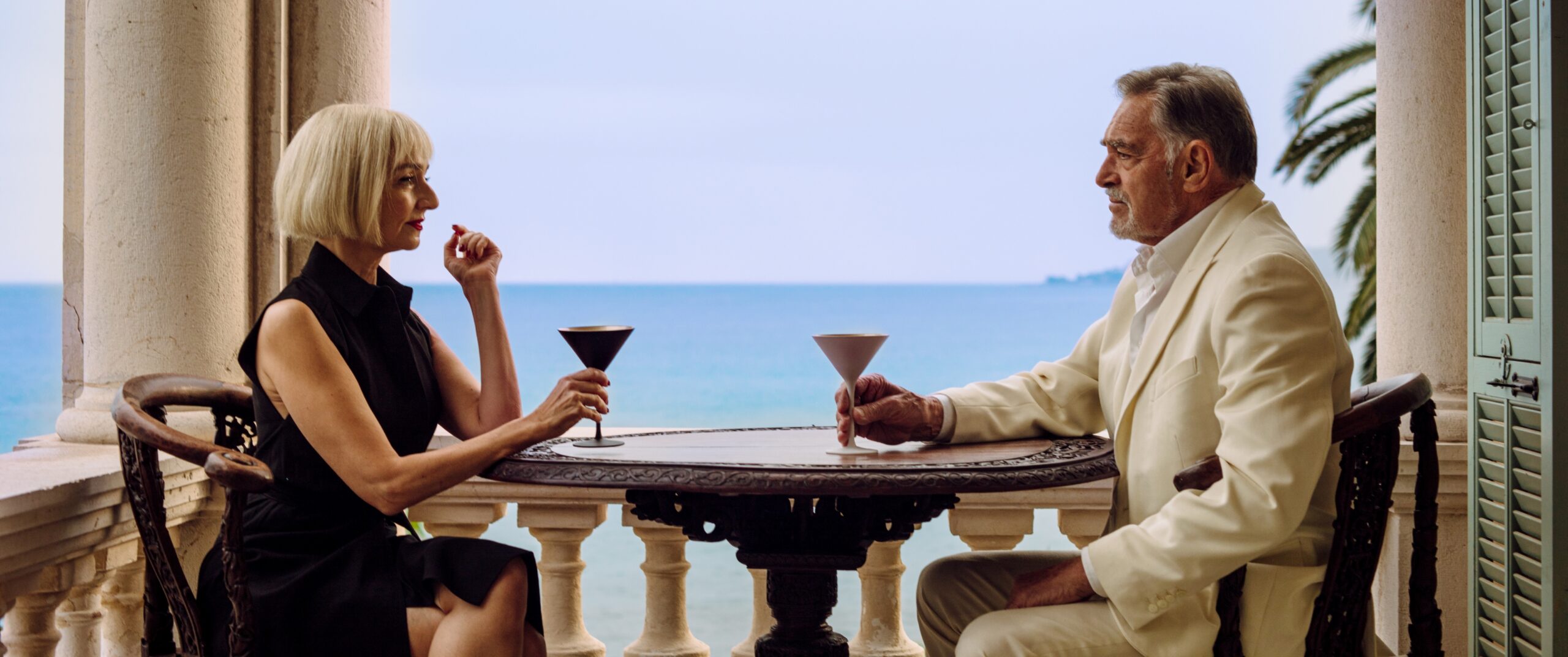
On the eve of the commercial release of Reflet dans un Diamond Mort – which, in 2025, was selected for the Silvestre competition at the 22nd edition of IndieLisboa – we decided to invite the filmmaking duo to answer a few brief questions about the film and their work.
Reflet dans un Diamond Mort opens in Portuguese cinemas this Thursday, 13 August.
Here is the full text of the first interview in the “Fora de Campo” (Off-screen) series, which brings together fresh perspectives and viewpoints beyond the IndieLisboa Q&A screenings.
Looking back, when did cinema first become part of your life? Was there a particular moment or experience that made you realize filmmaking was the path you wanted to pursue?
Our love of cinema began very early on with Charlie Chaplin. Back then, there were lots of silent films on the telly, and it was through silent films that we discovered cinema. So Charlie Chaplin was important to both of us; then, for me, there was the discovery of Fellini’s “La Dolce Vita” and Kubrick’s “A Clockwork Orange”, which were a decisive step in my desire to tell stories differently. They were films that dealt with subjects that moved me, but in a different way – very artistically. As for Hélène, she was looking for a way to communicate her ideas, a language; let’s say that when it came to spoken language, she wasn’t very comfortable, and through cinema she found a language that allowed her to express herself, and it was from that point on that cinema became something very important in her life.
Your films have a very distinctive cinematic language. How would you describe your relationship with cinema, and what continues to draw you to it as a means of artistic expression?
Actually, what made us want to get into filmmaking were the female and male directors. It was the experiences we had as members of the audience that filled us with wonder and made us want to step into that world, to use that language and, in turn, try to bring joy and a sense of wonder to the audience. So, when we’re making films, such as *Reflet dans un diamant mort*, we draw a lot of inspiration from the James Bond films we used to watch as children, which featured slightly zany gadgets that sparked the imagination – gadgets that weren’t quite as technologically advanced as they are today.
And there you have it – that was a source of wonder. As for our relationship with cinema, we often tackle a specific genre; we often work in genre cinema. So in this case, it’s the spy film.
In our previous film, there were elements of the western, the crime thriller and the fantasy genre. And so, in genre cinema, there are certain conventions. We draw a lot of inspiration from Italian genre cinema, where those conventions were very visual, given that Italian genre cinema features great directors such as Sergio Leone and Dario Argento, who are true masters of their craft.
And so, we’re using this genre-specific language—which is a purely visual language—not to retell the stories those directors told in the 1960s and 1970s, but to try and tell our own stories. So we’re appropriating this language to tell our own stories.
How did the first seeds of Reflect of a Raw Diamond emerge? At what point did those initial ideas begin to shape a screenplay, and what artistic or emotional impulses guided the project’s development?
The initial spark of inspiration for “A Dead Diamond” came from a Monty Hellman film, “Road to Nowhere”. Hélène and I went to see that film in 2011. It starred Fabio Testi, whom neither Hélène nor I had seen in any recent films for a long time.
He reminds one of Sean Connery. And when we came out of that screening, we thought, why not try to create a sort of blend between James Bond and “Death in Venice”, bearing in mind that it was Fabio Testi who was, after all, the initial inspiration. So we wrote the screenplay with him in mind.
In fact, we had that idea back in 2011 and started writing the film in 2019. And after seeing an opera, Christophe Honoré’s “La Tosca”, which treated “La Tosca” in the same way as Billy Wilder’s “Sunset Boulevard”, we thought, ‘Ah, why not add this second layer of “Sunset Boulevard” to this blend of “Death in Venice” and James Bond?’
And that’s how we started writing the screenplay. Afterwards, all around us, people in our circle were getting older; old age was catching up with those close to us. And it’s a film that draws on this nostalgia for the past through the protagonist.
And we question the past a little, the nature of the past. That’s it.
You’ve been working together for several years. How did your collaboration begin, and how has your creative process evolved as a filmmaking duo? Do you approach every aspect of the production collectively, or have you naturally developed complementary roles throughout the different stages of filmmaking?
So Hélène and I have been working together for 26 years. In fact, we were a couple to begin with, and a month after our first kiss, we made our first short film. We shared this desire to make films, and as we were in love, we tried to blend our two worlds into one.
So it’s really… For us, this collaboration is linked to our intimate relationship, and we couldn’t do it with anyone else. And so, at the start, Hélène was very, very, very driven. She wanted… She was fully committed to making things happen.
She was really hands-on. I, on the other hand, was more into the abstract, into ideas, but I wasn’t… You see, I lacked the drive for the practical side. I was more in my head.
And so, we started making our first film together, called *Catarsis*, a three-minute short film where we blended a world inspired by Italian genre cinema, which came from me. We explored self-destruction through the *giallo* genre. And Hélène brought in the whole visual aspect, which was more in the vein of experimental cinema, like Chris Marker’s *La Jetée*.
So we blended these two types of cinema. And there you have it: it resulted in this little three-minute short film, which was the start of it all and the foundation of our collaboration. And then, over the course of 26 years, the dynamics reversed.
Sometimes I was the driving force, and Hélène tended to lag behind. And other times, it was Hélène who was the driving force again. Things change a lot over 26 years.
But we’ve always done everything together. We haven’t divided up the tasks. It’s been a bit of a symbiotic relationship.
And the reason we don’t split the tasks is that we come from two different worlds, so we need to talk a lot and agree on things beforehand so that we can speak with one voice.
The film’s tonal approach is very unique. Could you talk about how you developed it and what kinds of cinematic references or intuitions informed it? On one hand, there is a levity and excitement that you expect from a spy thriller, but as the film’s narrative spiral grows deeper, a gravity and sadness begins to emerge also.
For this film, right from the start, we wanted to create a synergy between two contrasting cinematic styles. One is entertainment cinema, such as James Bond, for example, and the other is a more personal, more melancholic style, shall we say, like *Death in Venice*. And so, for us, this synergy was going to work thanks to Fabio Testi, who comes from both these cinematic genres.
He’s made Italian westerns, Italian crime thrillers, and arthouse films, such as those by Zoulofsky, Chabrol and Montielman. So the starting point was to create a synergy between two opposing elements. We developed the screenplay; the idea had been brewing in our minds for 8–9 years.
And so, over those 8–9 years, we were inspired by all sorts of things, including exhibitions we’d visited. For example, we’d seen an exhibition on Op Art. Clouseau made extensive use of Op Art.
And popular Italian cinema also made extensive use of art. So that tied in quite a bit with what we wanted to do – photo exhibitions, and opera, as I mentioned earlier. Our passion for ‘fumettinerie’ – Italian comics for adults, such as Diabolik.
We’re also passionate about photo novels. And in terms of writing, we adopted the approach of Satoshi Kon, an Italian director who made *Paprika*, *Millennium Actress* and *Perfect Blue*, who described his style as ‘stereoscopic writing’. In other words, you write the screenplay with different narrative layers.
And every time you watch the film, you discover a new aspect of it, and it takes on ever greater depth. It’s a bit like looking at a diamond: depending on which facet you look at, you see something different. So we’ve woven together all these ideas that were on our minds – the things we wanted to talk about – through this narrative, which opens up the film, turning its narrative into a spiral, allowing the viewer to lose themselves in it and to revisit it time and time again.
Fabio Testi’s presence gives the film an extraordinary resonance, carrying with it the legacy of a remarkable era of cinema. How did he become involved with the project? Was he someone you envisioned from the outset, or did the collaboration emerge later in the process?
Fabio Testier really was the driving force behind the project. If we hadn’t seen that Montiel Mann film with him, we’d never have come up with the idea. So, as I was saying, it was in 2001 that we had the idea.
And we shot it in 2023, I think, so 12 years later. So we had Fabio in mind. And as you say, he represents a… He’s a cinema legend.
And at the same time, he’s been involved in both mainstream cinema and arthouse cinema. So he was really the key to creating this character, to bringing these two types of cinema together. So we gave him the script to read once we’d finished it.
It was during the COVID era. And precisely because he’d worked with people like Montiel Mann and Zoulofsky, he was completely open to experiences that were, shall we say, different from a more conventional commercial film. And the fact that we were shooting on film took him by surprise straight away.
He didn’t think people still shot on film. And that made him want to do the film. We really… In any case, if he hadn’t agreed to do the film, we’d have been in a right pickle because we couldn’t see anyone else for the part.
So, thank goodness he agreed. We talked to him at length, in fact, about those years when he made all those legendary films. And actually, it was really useful to us – all the anecdotes he told us helped us direct him in the role of Reflet in *Un diamant mort*.
Because he’s a very expressive person. When he tells you a story, you see a certain glow come over his face, a subtle change. So we used what he was telling us, and what we’d seen reflected on his face, to build the character on camera.
Voilà.